




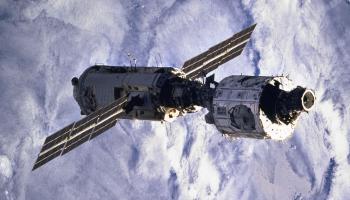
The International Space Station was assembled in orbit, and today marks the 22nd anniversary of the launch of the first module of the ISS “Zarya” (meaning “dawn” in Russian) into space (November 20, 1998). A few weeks later, the second module “Unity” was launched and the two modules were coupled together, marking the first stage in the assembly of this permanent station, a cooperation between nations to propel humanity further into an era of space travel and space exploration for humans.

Royal Belgian Institute for Space AeronomyPhysics and chemistry of the atmosphere of the Earth and other planets, and of outer space.
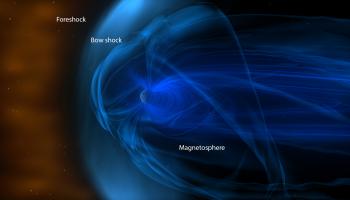
Cluster is one of the few space missions that is older than 22% of the Belgian population! Celebrating its 20th birthday this year, it has been gathering data about the Earth’s magnetosphere ever since. This continuous monitoring is of particular interest to researchers, as it allows for the study of long-term processes in the Earth’s magnetosphere, and how these processes depend on the Sun’s variability.
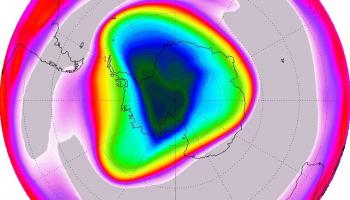
The hole in the ozone layer above the Antarctic is very deep this year, due to the exceptionally cold temperatures in the stratosphere. Whereas the ozone hole over Antarctica was the smallest ever measured last year, it could well be one of the largest this year. Whether the ozone hole will actually evolve towards a record, will be confirmed by satellite observations in the coming days and weeks and will depend mainly on the further stability of the stratospheric polar vortex.

During the summer of 2018, a widespread drought developed over Northern and Central Europe. The increase in temperature and the reduction of soil moisture have influenced carbon dioxide (CO2) exchange between the atmosphere and terrestrial ecosystems in various ways, such as a reduction of photosynthesis, changes in ecosystem respiration, or allowing more frequent fires.

While the Royal Belgian Institute for Space Aeronomy is a relatively young one, it has a rich history, entangled and interwoven with the emergence of the space age. In this article, you'll find a short introduction to its beginnings, as well as a fragment of archival footage from the BRT (Belgische Radio- en Televisieomroep), and a video showing the Institute today.
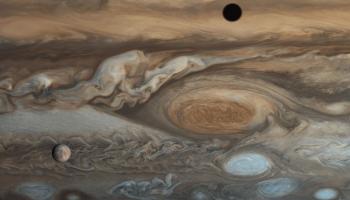
Things are kicking into a higher gear in our MAJIS lab. A team of scientists and engineers from the Royal Belgian Institute for Space Aeronomy has been working for some time on the development of a characterisation facility for one of two detectors of a space instrument called MAJIS, planned to be launched on board the JUICE spacecraft to the Jupiter’s system in 2022.