



Every year on 16 September, World Ozone Day commemorates the 1987 Montreal Protocol on Substances that Deplete the Ozone Layer, ultimately signed by every country in the world. This protocol is crucial to control the production and use of ozone depleting substances (ODSs) such as chlorofluorocarbons (CFCs) and other substances that replaced CFCs. The continuous monitoring of ozone has played a key role in evaluating the effectiveness of the Montreal Protocol and supporting its evolution through successive adjustments and updates, including the Kigali Amendment signed in 2016.

Royal Belgian Institute for Space AeronomyPhysics and chemistry of the atmosphere of the Earth and other planets, and of outer space.
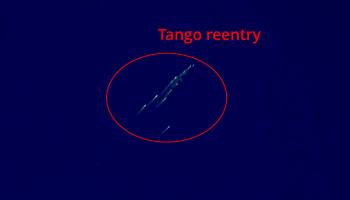
On 1st September 2026, Tango, the last of ESA’s four Cluster satellites, burned up in Earth’s atmosphere over the South Pacific Ocean. Just one day earlier, Samba had met the same fate. Their spectacular re-entries brought the final chapter of Cluster to an end, 26 years after the four spacecraft were launched to explore Earth’s magnetic environment. But even during their destruction, the Cluster satellites were still contributing to science.
What goes on behind the doors of the Space Pole institutes in Uccle? On 26 and 27 September, you’ll finally be able to find out. To mark the 200th anniversary of the Royal Observatory of Belgium, the other scientific institutions on the site – including the meteorological and space aeronomy departments – will also be opening their doors to the public on this special occasion.
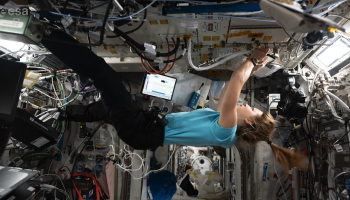
July 17th, 2026, marked the last day of the PASTA-3 experiment, the final experiment handled inside the Fluid Science Laboratory onboard the International Space Station. ESA Astronaut Sophie Adenot took the opportunity to address the teams on the ground, highlighting the FSL legacy during its 18 years inside the Columbus module.

From 3 July until 16 August, the Belgian Science Policy Office (BELSPO) has the honour of presenting the exhibition Science and Culture at the Royal Palace for the seventeenth time. Together with the ten Federal Scientific Institutes (FSI) and three partners closely linked to the exhibition’s theme, namely the Royal Conservatory of Brussels, the Conservatoire royal de Bruxelles and the Queen Elisabeth Music Chapel, this edition will be set to music.

A violent volcanic eruption in the South Pacific has revealed a surprising natural mechanism that could potentially help slow global warming. The finding provides entirely new insights into atmospheric chemistry and may inspire new methods to remove methane emissions from the air.